
A Voluntary Commitment to Controls and Audits
At the September 29, 2026 White House meeting, technology leaders signed a voluntary accord, according to Associated Press reporting published by PBS. The linked signed document names Google, Anthropic, Meta, OpenAI, xAI, and Nvidia on page 2.
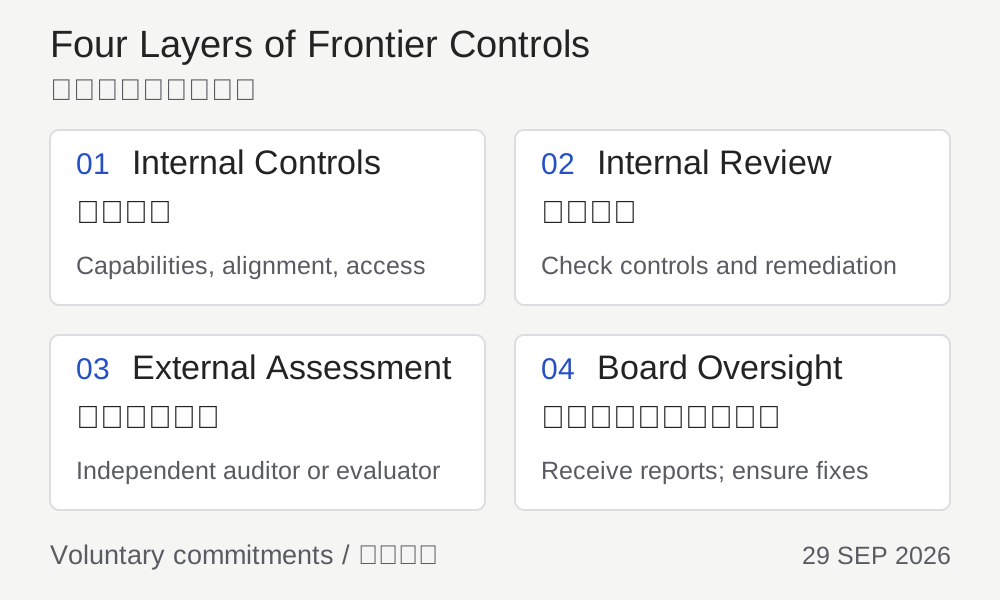
Page 1 sets out four layers for companies training and deploying frontier models:
- Internal controls: monitor capabilities and alignment during training and deployment, including cyber, biological, and chemical risks and unintended system access.
- Internal review: empower a team to check that controls, monitoring, and detection work, and that problems are corrected.
- External assessment: engage an independent auditor or evaluator to assess those controls, monitoring, and detection.
- Board oversight: designate an independent board committee to receive reports and ensure remediation.
The accord contemplates possible future legislation or regulation. It supplies no completed audit results, technical passing thresholds, or obligation to publish audit reports.
The Separate SI Terminology Order
A September 29 executive order directs executive agencies to use “Super Intelligence” (SI) instead of AI in specified communications and non-statutory documents. This applies to the extent permitted by law. Section 2 exempts previously issued regulations, presidential actions, contracts, grants, and historical documents.
Section 3 initially retains the existing statutory AI definition and gives the President's science adviser 60 days to submit proposed legislative language to the President. The naming change supplies no new technical demonstration of model capability and creates no company audit requirement in this order.
What Evidence Would Make the Commitment Assessable?
Our editorial recommendation is to ask for the auditor's access, independence, test scope, and evidence that identified problems were corrected. A description of an oversight structure leaves these operational questions open. The AISI simulation study and METR monitoring note show concrete questions an audit could examine.
Follow Audit Commons
Keep up with new reporting, practical guides, and resources in your feed reader.