
What Anthropic Reports
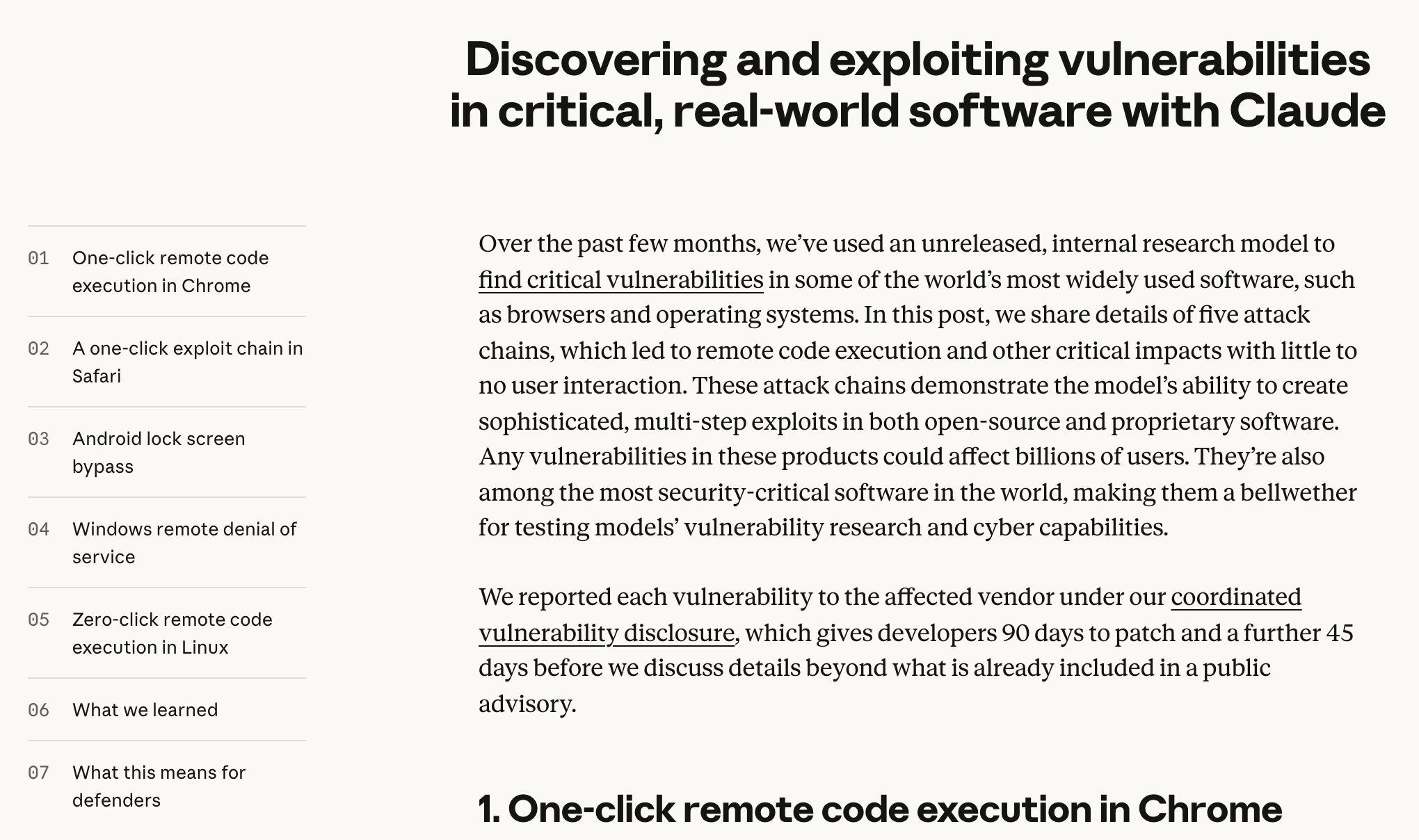
On October 27, 2026, Anthropic's Frontier Red Team described five attack chains that an unreleased internal research model built against Chrome, Safari, Android on a Pixel 9, Windows, and the Linux kernel. Reported impacts range from code execution after one click to reading data from a locked phone and remotely crashing servers. Anthropic says the model wrote each exploit "after initial prompting," but it does not quantify human involvement, the number of runs, or findings that failed verification, and it does not identify the model. This brief omits technical details.
Disclosure and Vendor Records
Anthropic says it reported each flaw under its coordinated disclosure policy, which gives vendors 90 days to patch and 45 more days before further detail. Vendor records we checked credit Anthropic researchers:
- Microsoft's entry for CVE-2026-33096, a denial-of-service fix released April 14, credits an Anthropic researcher and Calif.io "with Claude," alongside two Microsoft teams.
- Apple's iOS 26.5.2 security notes of June 29 credit two Anthropic researchers "with Claude" for a WebKit fix.
- The Linux kernel fix for CVE-2026-98432 names an Anthropic researcher as reporter.
- Chrome release notes from September 29 to October 27 credit dozens of critical or high severity fixes to one of the post's contributors, many marked "assisted by Claude." We could not reconcile them with Anthropic's count of 62 CVEs.
Anthropic says Google addressed the Android issue but links no advisory. The vendor records date from April to October.
Defense and Evidence Limits
Anthropic advises defenders to scan their own code and to scan changes at pull-request time. It has released a Claude Code security plugin, which moved on October 26, so the post's link no longer works. Anthropic also points to its Cyber Verification Program for vetted security teams. Vendor credits confirm that reports led to fixes. They do not verify the model's autonomy, the scanning harness, or its yield, and the post cites no independent review of the method.
Follow Audit Commons
Keep up with new reporting, practical guides, and resources in your feed reader.